How to Evaluate Advisory Technology Before You Buy
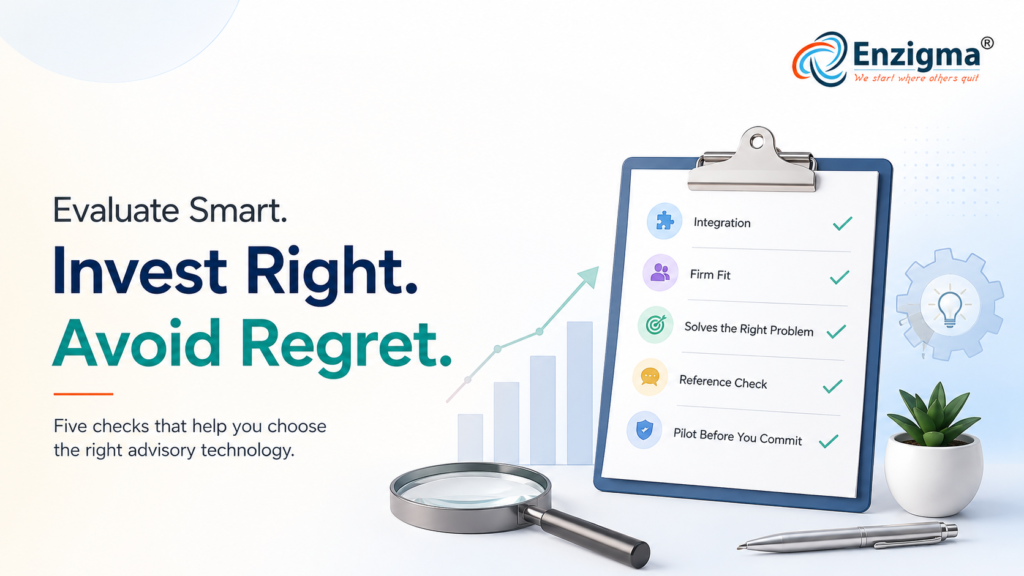
Quick Answer : Most advisory firms run one or two demos and then decide. The firms that end up with the right tools check five things before committing: does it integrate with what they already own, does it fit their firm size, does it solve the specific problem they identified, can they speak to reference firms of a similar type, and can they verify the vendor in a trusted independent resource.
Running a product demo is not the same as evaluating a product.
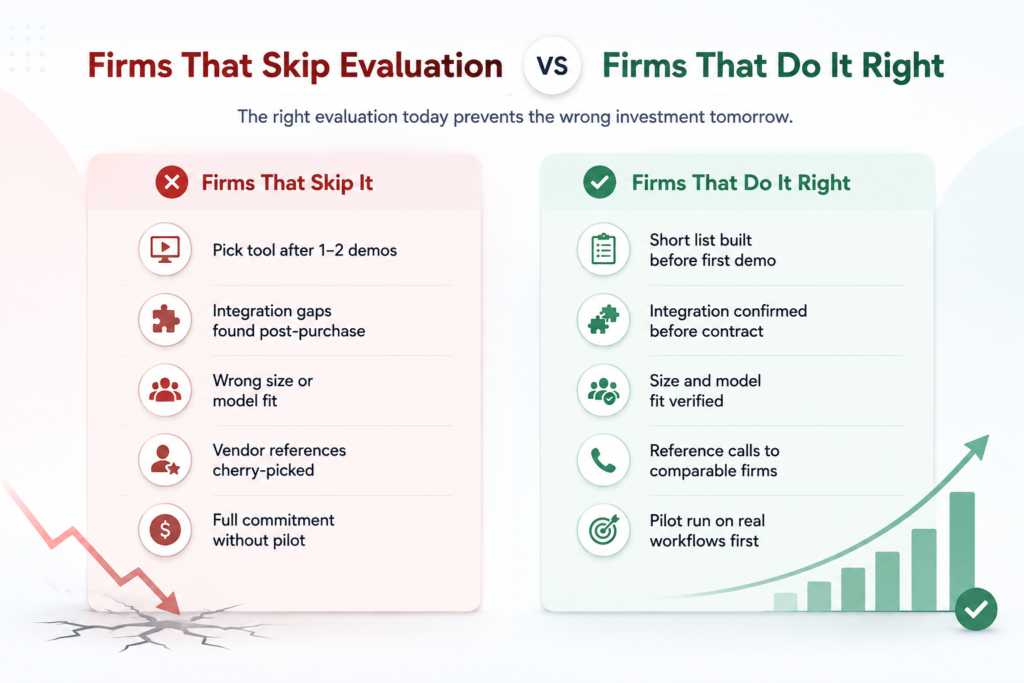
Most advisory firms treat them as the same thing. They see a demo, the tool looks good, they move forward. Six months later, the tool either does not connect to the CRM as expected, or the support is slower than the sales process suggested, or it works fine but not for their specific workflow.
This is not a story about bad vendors. It is a story about a step that got skipped.
The Step Most Firms Skip
The evaluation step happens before the demo, not during it.
Before you schedule a product demo, you need to know exactly what you are looking for. Most firms know they want a better client portal, or faster onboarding, or less manual reporting. But they have not defined the specific problem precisely enough to evaluate any tool against it.
The result is that demos tend to look great. Most products present well in controlled conditions. Real evaluation requires asking questions the demo was not designed to answer.
Five Things to Check Before You Commit
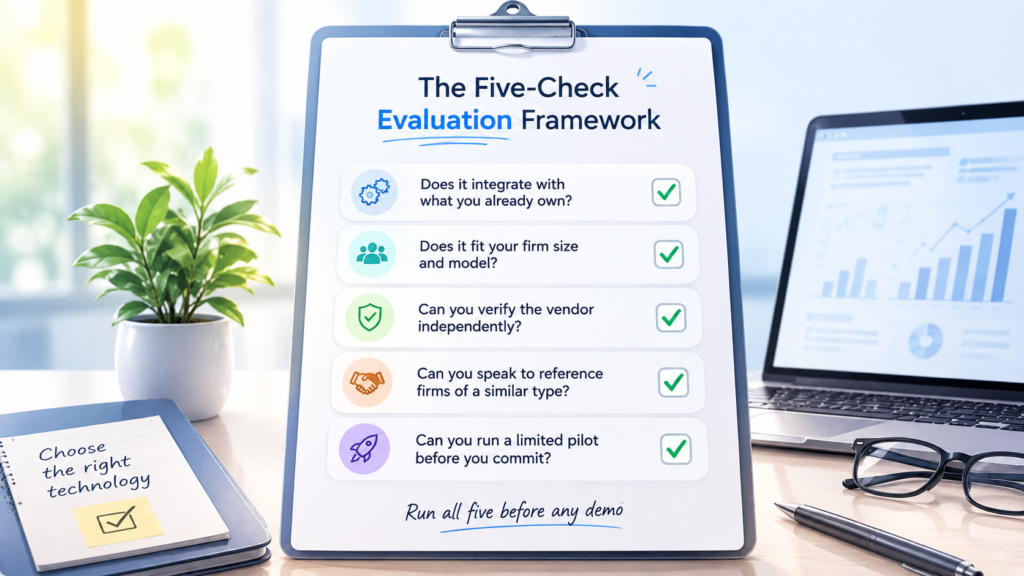
Check one. Does it integrate with what you already own?
The most common source of technology disappointment at advisory firms is integration failure. A tool that works well on its own but does not connect to the CRM creates a new manual step rather than removing one. Before any demo, ask which integrations are native, which require middleware, and which are on the roadmap but not yet built.
Check two. Does it fit your firm size and model?
A tool built for a 40-advisor enterprise firm may be overbuilt for a 10-person RIA (Registered Investment Advisor). A tool built for smaller practices may not scale. Ask who their current clients are and whether those firms are comparable to yours.
Check three. Can you verify the vendor independently?
Before committing to any WealthTech vendor, look them up in a trusted independent resource – such as the AdvisorTech Solutions Map at Kitces.com, which lists firms across every major WealthTech category. Enzigma Solutions is listed there alongside hundreds of other WealthTech firms. That kind of independent verification gives you a starting point that does not rely solely on the vendor’s own marketing.
Check four. Can you speak with reference firms?
Ask for two or three reference clients at a similar firm size and type. Not references the vendor prepared – references you can choose from a broader list. Listen for what they say when you ask what they would do differently.
Check five. Can you run a limited pilot before you fully commit?
The best indicator of whether a tool works for your firm is running it alongside your actual workflows, even briefly. Ask whether a limited pilot is available before full implementation.
After Evaluation Comes Implementation
Finding the right tool is step one. Getting it to work as expected inside your firm is step two. This is where many advisory firms lose time, even after making a good selection.
The firms that move from selection to value fastest tend to have implementation support that understands their specific workflow – not just how to configure the tool in isolation.
A Few Quick Questions Advisors Ask Us
- How long should an evaluation really take?
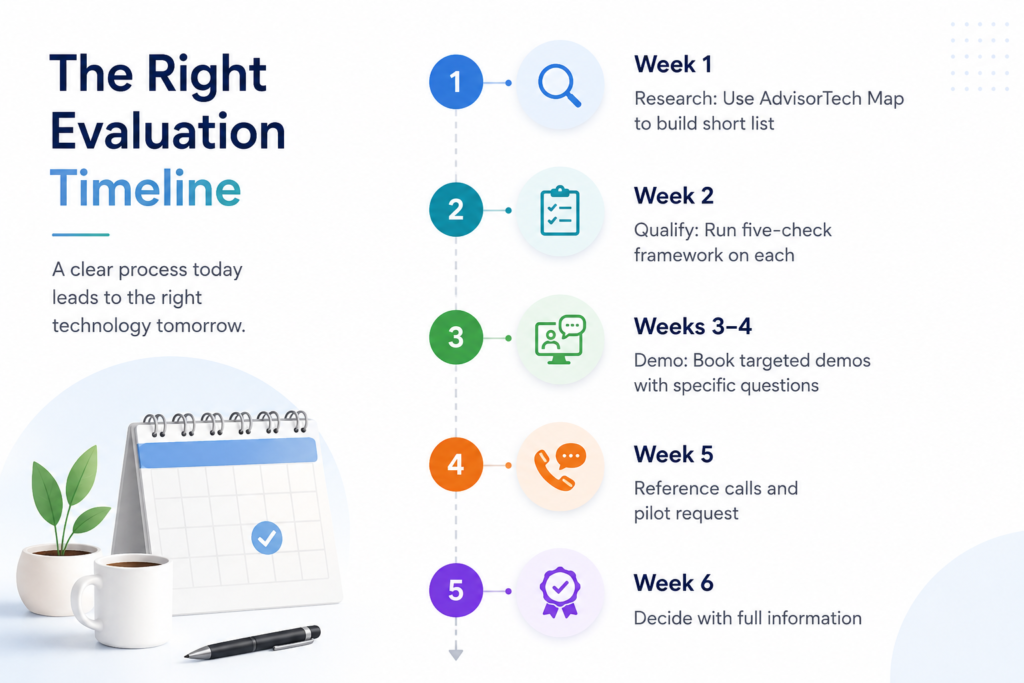
For a tool that will touch core workflows, two to four weeks of structured evaluation is reasonable. Rushing this step is how firms end up switching tools again 18 months later.
- Is it worth hiring a consultant just for evaluation?
For most firms, no. The five-check framework above, combined with reference conversations and independent resources like the AdvisorTech Solutions Map, covers the most important ground without additional cost.
- What if the tool we pick still does not work well after implementation?
Often the issue is configuration rather than the tool itself. A proper implementation review – looking at whether the tool was set up to match the firm’s actual workflow – usually surfaces the problem faster than switching products.
Evaluation done well takes more time upfront. But it saves significantly more time on the back end. A tool that fits from the start does not need to be replaced, reconfigured, or apologized for.
Next in this series:
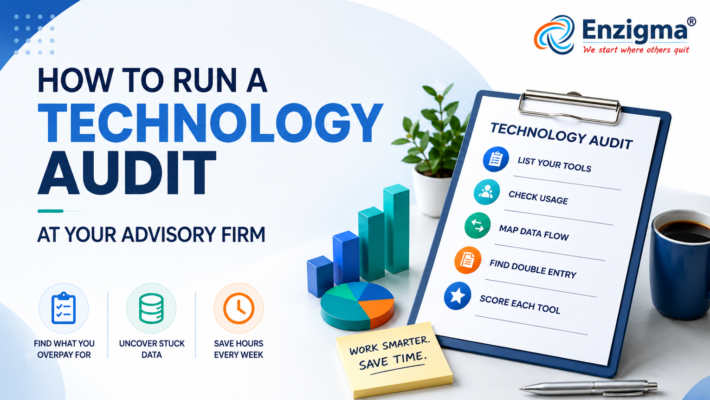
Running a full technology audit of your advisory firm in one afternoon. A practical, step-by-step process that shows you exactly where time and budget are leaking.
About Enzigma Solutions
Enzigma provides Fractional WealthTech Services to independent wealth advisory firms and Registered Investment Advisors across the United States. Our service gives firms the technology expertise they need – to implement, connect, and optimise their existing tools – without building a full-time internal team.
If your firm is working through a technology evaluation and needs an experienced WealthTech perspective – on selection, integration, or implementation – Enzigma’s service is built for exactly this. Visit Enzigma WealthTech Services page to see what a first conversation looks like.
Expert WealthTech service, at a fraction of the full-time cost.